Author Archives: Andrea

Collaborative Learning in Agentic Systems: A Collective AI is Greater Than the Sum of Its Parts

The paper introduces MOSAIC, a new algorithm for collaborative learning among autonomous, agentic AI systems that operate in decentralized, dynamic environments. These agents selectively share and reuse modular knowledge (in the form of neural network masks) without requiring synchronization or centralized control.

Key innovations include:

  • Task similarity via Wasserstein embeddings and cosine similarity to guide knowledge retrieval.
  • Performance-based heuristics to decide what, when, and from whom to learn.
  • Modular composition of knowledge to build better policies.

Experiments show that MOSAIC outperforms isolated learners in speed and performance, sometimes solving tasks that isolated agents cannot. Over time, a form of emergent self-organization occurs between agents, resulting from the discovered hierarchies in the curriculum, where simpler tasks support harder ones, enhancing the collective’s efficiency and adaptability.

Overall, MOSAIC demonstrates that selective, autonomous collaboration can produce a collective intelligence that exceeds the sum of its parts.

The paper: https://arxiv.org/abs/2506.05577
The code: https://github.com/DMIU-ShELL/MOSAIC

Abstract:

Agentic AI has gained significant interest as a research paradigm focused on autonomy, self-directed learning, and long-term reliability of decision making. Real-world agentic systems operate in decentralized settings on a large set of tasks or data distributions with constraints such as limited bandwidth, asynchronous execution, and the absence of a centralized model or even common objectives. We posit that exploiting previously learned skills, task similarities, and communication capabilities in a collective of agentic AI are challenging but essential elements to enabling scalability, open-endedness, and beneficial collaborative learning dynamics. In this paper, we introduce Modular Sharing and Composition in Collective Learning (MOSAIC), an agentic algorithm that allows multiple agents to independently solve different tasks while also identifying, sharing, and reusing useful machine-learned knowledge, without coordination, synchronization, or centralized control. MOSAIC combines three mechanisms: (1) modular policy composition via neural network masks, (2) cosine similarity estimation using Wasserstein embeddings for knowledge selection, and (3) asynchronous communication and policy integration. Results on a set of RL benchmarks show that MOSAIC has a greater sample efficiency than isolated learners, i.e., it learns significantly faster, and in some cases, finds solutions to tasks that cannot be solved by isolated learners. The collaborative learning and sharing dynamics are also observed to result in the emergence of ideal curricula of tasks, from easy to hard. These findings support the case for collaborative learning in agentic systems to achieve better and continuously evolving performance both at the individual and collective levels.
PhD Studentship: Lifelong Learning and Shareable Models: How to Reduce the Energy Footprint of AI and Contribute to a Sustainable Decarbonised Future

A fully funded PhD position is available in my research group at Loughborough University on the topic “Lifelong learning and shareable models: How to reduce the energy footprint of AI and contribute to a sustainable decarbonised future”. 

Please find further details at 

https://www.lboro.ac.uk/study/postgraduate/research-degrees/phd-opportunities/lifelong-learning-shareable-models

Application deadline: 19th July 2024

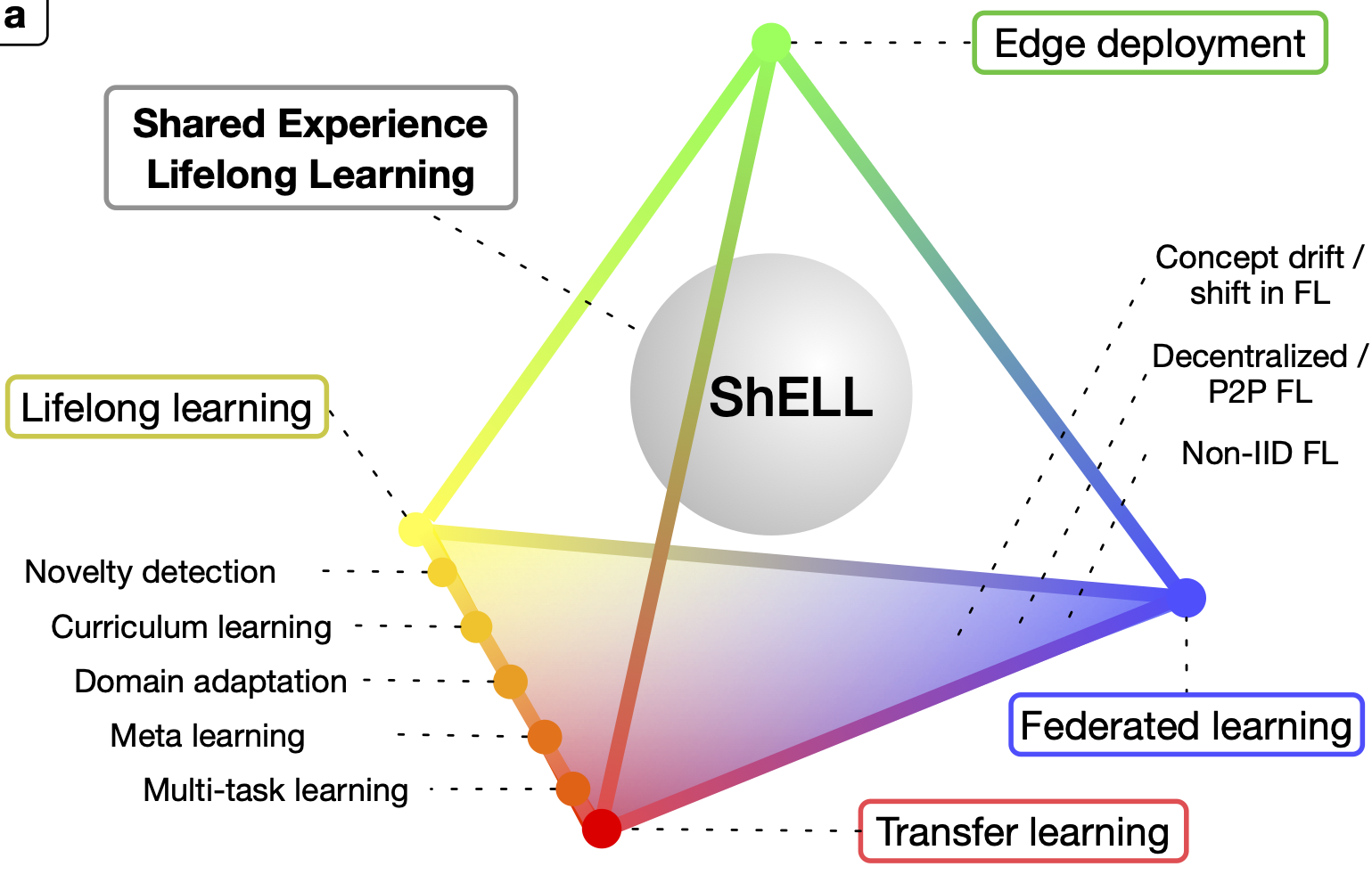
This project will further extend research directions highlighted in our recent paper “A collective AI via lifelong learning and sharing at the edge” Nature Machine Intelligence, March 2024, available at : https://rdcu.be/dB9zt

Requirements: Applicant should have, or expect to achieve, a first-class honours (or international equivalent) in computer science or related subjects. Applicants must meet the minimum English language requirements ( International website)

Project details: Current AI models are not designed to reuse and share knowledge. When conditions change, e.g., data distributions, locations, or platforms, retraining needs to occur from scratch. In some cases, like for foundation models or for complex robotics tasks, the process requires very large amount of data and energy. Recent advances towards lifelong learning and sharable models promise to create a new efficient AI landscape in which machine-learned knowledge can be built incrementally and worldwide with optimized energy use. This PhD project aims to advance the latest lifelong learning and sharable AI models to contribute to reduce the energy footprint of AI. An overview of this emerging field can be found in a recent publication from our group on Nature Machine Intelligence  https://doi.org/10.1038/s42256-024-00800-2

The student will be part of a growing group of researchers in machine learning and artificial intelligence in the Computer Science Department with collaborators from Loughborough Business School. Learn more about Digital Decarbonisation. The project is in collaboration with the co-supervision of Dr. Vitor Castro, Dr. Rebecca Higginson and Prof. Tom Jackson. 

Ph.D. positions in lifelong learning and neuromorphic AI/ML at Loughborough University

We would like to invite candidates to apply for funded Ph.D. positions in AI and ML at the Computer Science Department at Loughborough University.

Topics of interest involve AI/ML areas such as lifelong learning, bio-inspired neural computation and spiking neural networks with a particular focus on applications in reinforcement learning, robotics, and edge-AI.

Details.This new field of AI seeks to create machines that learn during a lifetime similarly to biological brains. This research continues and advances recent progress from the DARPA projects Lifelong Learning Machines (L2M) and Shared Experience Lifelong Learning (ShELL). The candidates will join a growing research group of Ph.D. students and postdocs working in the same area, and have access to the latest computational devices such as Nvidia A100 cards. Collaboration opportunities with world-leading AI laboratories will be encouraged and supported. Different projects will focus on aspects such as multi-agent neural reinforcement learning, neuromodulation, continual learning, low-power edge-computing, neuromorphic algorithms and implementations. Applications areas include autonomous vehicles and agents, advanced industrial systems, drones and other distributed robotic systems.

Further additional  links to our latest news and papers:
https://www.azorobotics.com/News.aspx?newsID=12518

https://openreview.net/forum?id=BJge3TNKwH

https://arxiv.org/abs/1703.10371

https://www.frontiersin.org/articles/10.3389/fncom.2021.666131/full

https://ieeexplore.ieee.org/abstract/document/9534283


Loughborough University. Loughborough University is a top-ten rated university in England for research intensity (REF2014). In choosing Loughborough for your research, you’ll work alongside academics who are leaders in their field. You will benefit from comprehensive support and guidance from our Graduate School, including tailored careers advice, to help you succeed in your research and future career.

Entry requirements. Applicants should have, or expect to achieve, at least a 2:1 Honours degree (or equivalent) in computer science or a related subject. A relevant Master’s degree and/or experience in one or more of the following will be an advantage: artificial intelligence, neural networks, robotics.

Funding information. Please note that studentships will be awarded on a competitive basis to applicants who have applied to this project and other advertised projects within the School. Funding decisions will not be confirmed until early 2022. The studentship is for 3 years and provides a tax-free stipend of £15,609 per annum for the duration of the studentship plus tuition fees at the UK rate.  International (including EU) students may apply however the total value of the studentship will cover the International Tuition Fee Only.

The position will be starting in October 2022 under the supervision of Dr. Andrea Soltoggio and Dr. Shirin Dora. If interested, please get in touch by emailing a.soltoggio@lboro.ac.uk or s.dora@lboro.ac.uk .

Sincerely,

Andrea Soltoggio and Shirin Dora

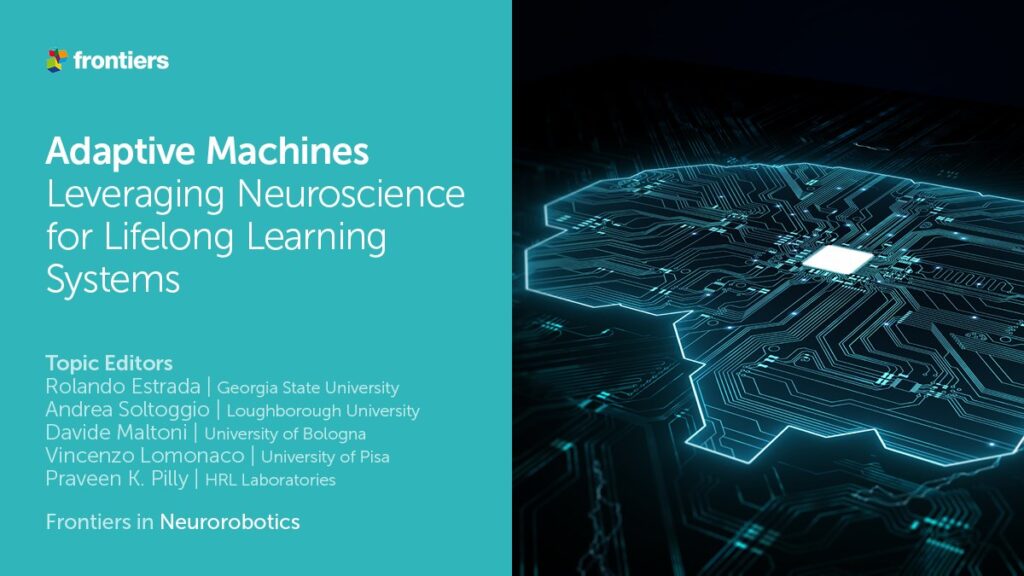
Adaptive Machines: Leveraging Neuroscience for Lifelong Learning Systems

I’m happy to advertise a new Research Topic in Frontiers available at:

Adaptive Machines: Leveraging Neuroscience for Lifelong Learning Systems


Deadline for paper submission: 30 September 2021.

Abstract:

Artificial intelligence has always sought inspiration in the brain. Artificial neural networks (ANNs), in particular, were modeled after their biological counterparts (biological neural networks, BNNs). However, state-of-the-art deep networks are drastically different from BNNs. Their architectures (at both the single-neuron and macro levels), learning algorithms, and failure conditions share little in common with brain circuit dynamics.

In particular, state-of-the-art deep learning is optimized for single, well-defined, static tasks. Deep networks struggle to learn multiple or evolving tasks over time (i.e., continual learning) or to adjust their processing based on environmental conditions. They are also less modular than BNNs, and thus less energy efficient, and utilize little-to-no feedback signals.

We believe that deep networks suffer from these limitations because their modeling of brain dynamics is too superficial. Modeling more sophisticated neural mechanisms is therefore key for deep networks to achieve continual or lifelong learning and to cope with open-ended, dynamic environments.

The goal of this Research Topic is to publish novel models and/or algorithms that expand the capabilities of deep learning (e.g., achieve better continual learning) by incorporating additional properties of BNNs. We are also interested in neuroscience research that elucidates mechanisms that can be leveraged by the AI community.

Neuroscience has uncovered a wide range of learning and regulatory mechanisms, at scales ranging from single molecules to the entire nervous system, that help the brain learn, remember, and adapt. These include replay (systems-level consolidation), neuromodulation, neurogenesis, neuroevolution, attention, homeostatic plasticity, and synaptic consolidation. There exist some deep learning techniques motivated by these mechanisms (e.g., experience replay or attention networks), but they have rarely been used for lifelong learning. As such, our focus will be on approaches that leverage brain-like principles—ideally biologically well-grounded—to solve problems currently beyond the capabilities of the state of the art. We will also welcome neuroscience research that helps to elucidate the brain’s mechanisms, in the hope that they can be used by the next generation of machine learning models.

The scope of this Research Topic covers:
(1) biologically inspired techniques in deep learning
(2) neuroscience research on how the brain facilitates learning and adapts to different contexts
We seek to address continual or lifelong learning, transfer learning, and other ML scenarios that go beyond the traditional, train-then-test learning paradigm. Since machine learning is an experimental field, a paper must include experimental results to be accepted; however, we encourage authors to include theoretical analyses of their methods.

We aim to collect the following types of manuscripts: Original Research and Brief Research Reports.
Since the goal of this Research Topic is to publish highly novel, experimentally grounded work, we are not interested in Reviews (Systematic, Policy and Practice, etc.), General Commentaries, or Opinions. In addition, since the editorial board does not include medical experts, we cannot accept Clinical Trials or Study Protocols.

Dr. P. K. Pilly is working as Senior Research Scientist for the company HRL Laboratories, LLC. Dr. P. K. Pilly has pending patents on continual learning.
The other Topic Editors declare no competing interests with regards to the Research Topic.


Keywords: Deep Learning, Continual Learning, Lifelong Learning, Neuroscience, Fast Adaptation


Important Note: All contributions to this Research Topic must be within the scope of the section and journal to which they are submitted, as defined in their mission statements. Frontiers reserves the right to guide an out-of-scope manuscript to a more suitable section or journal at any stage of peer review.

1 Research associate and 2 funded PhD. positions on the evolution of neural learning and plasticity

One research associate and two funded Ph.D. positions are available at the Computer Science Department, School of Science, Loughborough University, UK, on the topics of the evolution of lifelong learning in neural networks.

Research.  The aim is to develop new neuroevolution algorithms for lifelong learning. The objectives are to devise machine learning systems that autonomously adapt to changing conditions such as variation of the data distribution, variation of the problem domain or parameters, with minimal human intervention. The approach will use neuroevolution, neuromodulation, and other methodologies to continuously discover and update learning strategies, implement selective plasticity, and achieve continual learning.

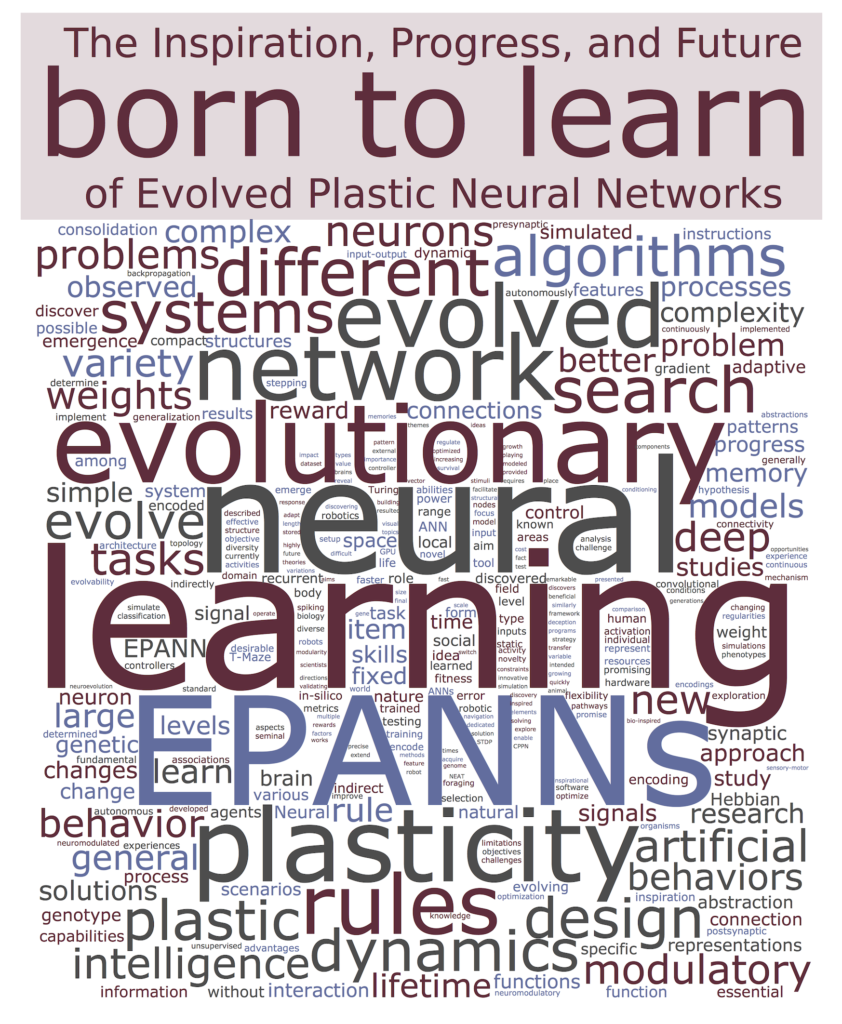
For an overview of the research direction, see the paper: Born to Learn: the Inspiration, Progress and Future of Evolved Plastic Artificial Neural Networks https://www.researchgate.net/publication/315710249_Born_to_Learn_the_Inspiration_Progress_and_Future_of_Evolved_Plastic_Artificial_Neural_Networks

Application areas include a variety of automation and machine learning problems, e.g. vision, control, and robotics, with a particular focus on resilience and autonomy.


Working environment. 
The research associate and Ph.D. students, based at the Computer Science Department, will work in an international team with opportunities for collaboration and travel. They will have access to a number of robotic platforms such as mobile and flying robots, manufacturing robots, High Performance Computing clusters, and GPU computing. The Computer Science Department and robotics laboratories have ongoing collaborations with large industries and programs to promote start-ups.

Loughborough University is ranked 7th in the UK in the 2019 League Table Ranking  http://www.thecompleteuniversityguide.co.uk/loughborough/performance ), and is located in Loughborough, a town well connected to London by a 1h20m journey by train.


Requirements.

Postdoc: A Ph.D. in Computer Science or related with a strong publication record, coding abilities, predisposition to work in a team and independence, passion for science, solid work ethics.

Ph.D. students: The ideal candidate holds (or is about to obtain) a first-class honour undergraduate/postgraduate degree (or equivalent) in Computer Science, Mathematics, Statistics, Electrical or Electronic Engineering, or has authored publications in recognised conferences/journals. Independent working skills are valued as well as the capability of working in a team. Collegiality and interpersonal skills are essential.

Excellent English language skills are also essential (see requirements here http://www.lboro.ac.uk/international/englang/index.htm)


Period and salaries. 

Postdoc position: until June 2020 (with possible extension) with a competitive salary at Grade 6 (http://www.lboro.ac.uk/services/hr/benefits/pay-rewards/)

Start: as soon as possible.

Ph.D. studentships:

Scholarship: £14,777 per annum plus tuition fees at the UK/EU rate.

Start: August 2018 or shortly after.

Duration: 3 years.


Enquiries and applications. Interested candidates are invited to send preliminary enquiries to a.soltoggio@lboro.ac.uk including a CV, a university transcript of marks, a list of references, and a statement of about 300 words motivating their interest in this area of research.

Deploying AI and deep learning to product apps

This is one just advertising video of the potential of the technology that we developed at Loughborough University in collaboration with ICE

Students in Artificial Intelligence

Students enrolled in the optional Artificial Intelligence module COC102 up from 20 to 71 (correction from the tweet below) since I started teaching it 4 years ago!

I hope I don’t regret that when marking…

On BBC One

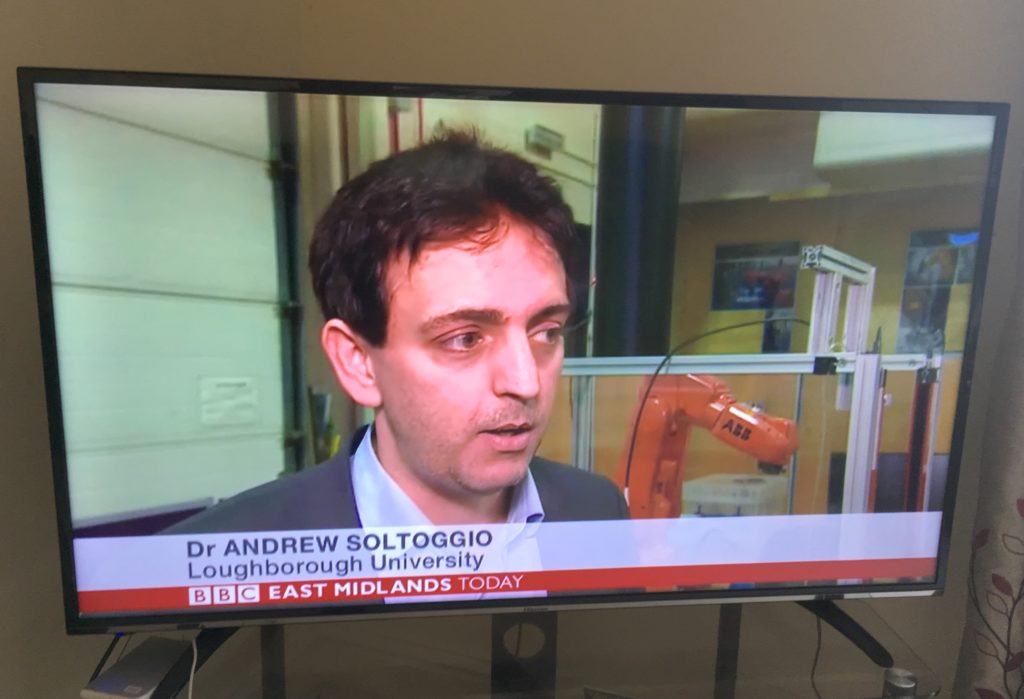
On BBC One (East Midlands Today). The potential impact of AI on the East Midlands. With Amy Harris. A bit of a surprise, but thanks for the opportunity!Andrea Soltoggio on BBC ONE